
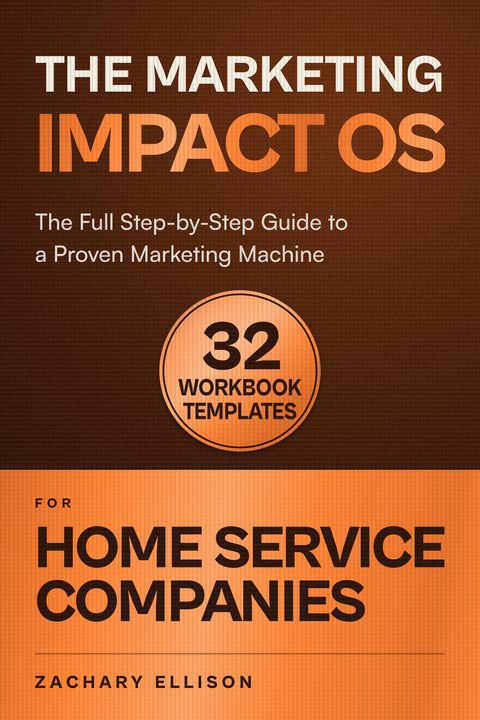

Fractional CMO for DTC brands. More new customers at a profit, and more of them ordering again.
A fractional CMO, execution and team for DTC and ecommerce brands that sell from their own store. We run the brand on one set of numbers built from Shopify and contribution margin, fix the weakest link first and run the plan with you every week. We have taken four consumer brands from 4 to 6 figures to 7 to 9 figures in revenue.
Four categories we have grown
We took four DTC brands, in coffee, cosmetics, jewelry and apparel, from 4 to 6 figures to 7 to 9 figures in revenue, each with lower COGS and a higher AOV. Each category makes money a different way, so each plan starts in a different place. DTC is one of the four industries we work in.
- 01
Runs on reorders
Coffee
A bag runs out in a few weeks. If the second order doesn't come, the first one rarely paid for itself. Reorder reminders timed to that window, and a subscription offer, carry the margin.
- 02
Runs on shade match and refills
Cosmetics
The wrong shade or a reaction ends the relationship after one order. Shade and skin-type guidance on the product page, sample sizes and refill reminders bring the customer back for a second order.
- 03
Runs on order value and gifting
Jewelry
People buy jewelry less often, and often as a gift. Sets, engraving and add-ons raise order value, and the plan follows the gifting calendar: Valentine's Day, Mother's Day and the holidays.
- 04
Runs on fit and new drops
Apparel
Returns eat apparel margin, and most of them come from fit. Size guidance, reviews that mention fit and photos that show true fit cut returns. New drops give past buyers a reason to come back without a discount.
Where DTC brands lose margin
Every new customer passes through all seven dimensions, from the first ad to the second order. A weak link in any one shows up as a first order that loses money, a cart left at checkout or a buyer who never comes back.
- Problem 01Marketing strategy
Growth is planned in revenue, not margin
The plan sets a revenue goal but not what a new customer is allowed to cost.
Example: a $70 average order with 35% product cost and 15% shipping and fees keeps $35 before ads. Pay $60 for that customer and you are $25 down until they order again. At 2,000 new customers a month, that is $50,000 a month waiting on repeat orders.
Set what a new customer can cost, by product, before you set the revenue goal.
- Problem 02Marketing data
Meta, Google and Shopify each claim the sale
Example: Meta claims 900 orders last month and Google claims 700, for 1,600. Shopify took 1,200, and some of those came from email and repeat buyers. Since iOS 14.5, the platforms model the sales they can't see, and each one takes credit.
ROAS is the credit each platform gives itself. Run the brand on store numbers: MER (total revenue divided by total ad spend), new-customer revenue and contribution margin after marketing. Use platform ROAS only to steer inside a platform.
How to report MER and contribution margin - Problem 03Funnel friction and CRO
Shoppers leave between the product page and payment
The usual causes: shipping cost that appears at the last step, a product page that loads slowly on a phone, a forced account and a discount code box that sends shoppers off to search for a code.
Example: 100,000 visits a month at a 2% conversion rate is 2,000 orders. At 2.5% it is 2,500 orders on the same ad spend.
Fix checkout and order value before you buy more traffic.
- Problem 04Marketing process
The second order depends on a flow nobody owns
The post-purchase emails went live at launch and haven't been tested since. Most first-time buyers never order again.
Example: 2,000 new customers a month with 20% ordering again within 90 days. At 25%, that is 100 more repeat customers every month with no added ad spend.
Give the second-order rate one owner and review it every Monday.
- Problem 05Marketing team
The agency runs the ads and grades its own work
The founder is also the CMO. The agency reports ROAS from its own dashboard. Nobody owns contribution margin.
Check two things: what a new customer cost last month, from store data, and who owns the ad accounts, the pixel and the email platform. If the agency owns them, your history leaves when they do.
- Problem 06Marketing technology
Your store, email and ad tools keep separate records
Shopify, Klaviyo and the ad platforms each hold a piece of the customer. Browser pixels miss a share of sales, so Meta and Google optimize on partial data.
Compare platform sales to Shopify orders every month. Server-side tracking sends store orders back to Meta and Google, so the platforms learn from what sold.
If you also sell on Amazon, some shoppers your ads reach buy there instead, and the ads look worse than they are. Put both channels in one view before you cut a campaign.
- Problem 07Marketing communication
The main offer is a discount code
A 20% first-order code on a $70 order gives away $14. That's 40% of the $35 the order keeps.
A first-order code also teaches customers to wait for the next code.
Give shoppers a specific reason to buy: what the product does, who it's for and proof from reviews. Where you would have used a code, use a bundle or a guarantee.
How we run your marketing, week by week
One loop runs from the first ad to the second order: Inspect, Ideate, Implement, Iterate. We install it in your brand, so the work keeps running after the plan, and repeat it until new customers pay back.
- 01
Weeks 1 and 2
Inspect
We pull Shopify orders, your ad accounts, your email and SMS platform and your product costs into one view. Revenue comes from the store, not the ad platforms.
The dashboard shows spend, new customers, CAC, MER and returning-customer revenue by channel. You see what a new customer costs next to what the first order keeps.
What you getA dashboard of CAC, MER and new and returning revenue by channel, built from store data.
Marketing Impact OSShopify brandInspectMarketing attributionLast 90 days vs the 90 beforeNew customers5,400+4%CAC (cost per new customer)$68+4%MER (revenue ÷ spend)2.2x−0.2Returning-customer revenue$398,000+5%Source Spend Orders New Revenue CAC TikTok $60,000 650 600 $42,250 $100 Email and SMS $12,000 4,200 300 $336,000 $40 Meta $180,000 3,000 2,400 $225,000 $75 Google Shopping $90,000 2,000 1,500 $150,000 $60 Affiliates $24,000 800 600 $64,000 $40 Total $366,000 10,650 5,400 $817,250 $68 - 02
Weeks 3 and 4
Ideate
We rank fixes by what they add to contribution margin. Most plans start with the second-order flow, order value at checkout or moving budget to the channel with the lowest CAC.
Each fix gets an owner, a deadline and an expected result before any money moves. We start at the top of the list.
What you getA ranked plan of fixes, each with an owner, a deadline and the margin it should add.
Marketing Impact OSShopify brandIdeateThe plan, ranked by impactGains per month- 1Send a second-order flow by email and SMSMost first-time buyers never order again.+$26,000Returning revenue
- 2Add bundles at checkoutOrders average $77 today.+$18,000+$5 per order
- 3Move $12,000 a month from TikTok to ShoppingTikTok costs $100 per new customer. Shopping costs $60.+80 new customersLower CAC
- 4Track sales server sideMeta, Google and the store each count sales differently.One numberFor every budget call
If the plan holds+80 new customers, +$44,000 a month
- 1
- 03
From week 5, biggest fix first
Implement
Your team, your agencies and ours make the changes: tracking, checkout, bundles, the post-purchase flow, product pages and the creative brief.
Every task has an owner, a due week and a status.
What you getA work list with an owner, a due week and a status on every change.
Marketing Impact OSShopify brandImplementThe work2 of 4 done- Move $12,000 a month from TikTok to ShoppingAgency · Week 1AgencyWeek 1Done
- Second-order flow, email and SMSRetention lead · Week 2Retention leadWeek 2Done
- Bundles at checkoutWeb team · Week 3Web teamWeek 3In progress
- Server-side tracking on Meta and GoogleWeb team · Week 5Web teamWeek 5Next
Monday check-in Every open task gets a status. A late one gets a new date and a reason.
- 04
Every week, with a review every 90 days
Iterate
Every week we compare spend to new customers, CAC, MER and contribution margin after marketing. Then we move budget between channels, products and seasons.
Every 90 days we put the numbers next to where you started. Zachary writes a short review that ends with the next decision. When you launch a product or open a channel, the playbook goes with it.
What you getA before-and-after of your numbers every 90 days and a review note that names the next decision.
Marketing Impact OSShopify brandIterate90 days laterBefore → after- CAC$68$59−13%
- MER2.2x2.6x+0.4
- Returning-customer revenue$398,000$476,000+20%
CAC by monthZachary's reviewCAC fell from $68 to $59 on the same $366,000. Returning-customer revenue went from $398,000 to $476,000 after the second-order flow went live. Next: move the last $8,000 a month off TikTok and into Shopping.
The numbers we report
- Cost per new customer (CAC) by channel
- New-customer MER
- Contribution margin after marketing
- Second-order rate within 90 days
- Average order value
- Returning-customer revenue
Services and starting prices
Most brands start with the Marketing Impact Roadmap: from $10,000, about four weeks. We find where margin leaks and what each fix is worth.
Brands spending on Meta and Google every month move to the Fractional CMO Retainer, from $5,000 a month. Zachary leads as your ecommerce fractional CMO every week: budget, agencies and priorities.
Brands without a marketing team use the Fractional Marketing Team, from $6,500 a month: ads, email, CRO and design specialists from our network, led by us.
For a second opinion, Advisory is $300 an hour or from $2,500 a month. Marketplace-only sellers start with the Marketing Impact Academy, from $1,000 a month.
Everything ongoing runs month to month with no setup fees, so you scale up or down as the brand changes. Every engagement starts with the free assessment or a 15-minute call.
Compare all fractional CMO servicesBrands we have worked with
- Crockett Coffee
- Avere Beauty
- Manikure
- Woodstock Zambon
- Outdoor Research
- Michael Jackson Live
- Amazon

The Marketing Impact OS for DTC Brands
The Full Step-by-Step Guide to a Proven Growth Engine. How to read the math of a first order, agree on one set of numbers, recover lost checkouts and bring first-time buyers back. The workbook comes with it.
What is in the book →The 2027 Marketing Impact Report for DTC Brands →Frequently asked questions
What does a fractional CMO do for a DTC brand?
You get a senior marketing leader for part of the month instead of a full-time CMO. A fractional CMO for ecommerce sets what a new customer can cost against contribution margin, runs the brand on MER and store data instead of platform ROAS, fixes checkout and the second order, and holds every agency to those numbers. Zachary Ellison, the #1 lifetime-ranked fractional CMO on Upwork, leads that work with the team.
Which DTC and ecommerce brands do you work with?
We work as a fractional CMO for consumer brands that sell through their own online store, most often on Shopify, from a first product to several lines. We have grown brands in coffee, cosmetics, jewelry and apparel, and other consumer products sold online the same way can fit. Brands that also sell on Amazon or in retail fit if their own store is part of the business. Marketplace-only sellers start with the Marketing Impact Academy.
How is a DTC fractional CMO different from an ecommerce agency?
An agency runs channels and reports results from its own platforms. A fractional CMO sits above every agency, checks their numbers against store orders and contribution margin, and moves budget to what pays back. Your brand should own the ad accounts, the pixel, the email platform and the data, and we set that up first if it isn't true today. Many brands keep their agency, and the fractional CMO checks its work.
Why run the brand on MER and contribution margin instead of ROAS?
Each ad platform reports ROAS on the sales it claims, and since iOS 14.5 those claims overlap and are partly modeled. MER is total store revenue divided by total ad spend, so no single platform can inflate it. Contribution margin after marketing shows whether the brand made money once product cost, shipping, fees and ads come out. We use platform ROAS to steer inside a platform and run the brand on the other two.
Do you work with brands that sell on Shopify and Amazon?
Yes, if your own store is part of the business. Ads on Meta and Google send some shoppers to Amazon, so we look at both channels in one view before judging any campaign. We decide which products and bundles go where on margin, not on which channel shows the bigger number. If you sell only on a marketplace, the Marketing Impact Academy is the better fit.
When should a DTC brand hire a fractional CMO?
When ad spend grows faster than contribution margin, or when nobody can say what a new customer cost last month. That usually happens after product-market fit, once you spend on Meta and Google every month but a full-time CMO salary doesn't make sense yet. Before that point, the Marketing Impact Academy teaches the same system for less.
How much does a fractional CMO cost for a DTC brand?
Starting prices: the Marketing Impact Roadmap starts at $10,000 and runs about four weeks. Roadmap + Installation starts at $35,000 over 90 days. Advisory is $300 an hour or from $2,500 a month, and the Academy starts at $1,000 a month. The Fractional CMO Retainer starts at $5,000 a month and the Fractional Marketing Team at $6,500 a month, scaled to your ad spend, channels and product lines once the Roadmap is done. Ongoing engagements run month to month with no setup fees.
Where to next
Start with your free Marketing Impact score.
It takes a few minutes. You get a score from 1 to 5 on each of the seven dimensions of your marketing and see where to start. If you’d rather talk first, book a free 30-minute call.